
Why Local Customers Are Your Most Valuable Audience
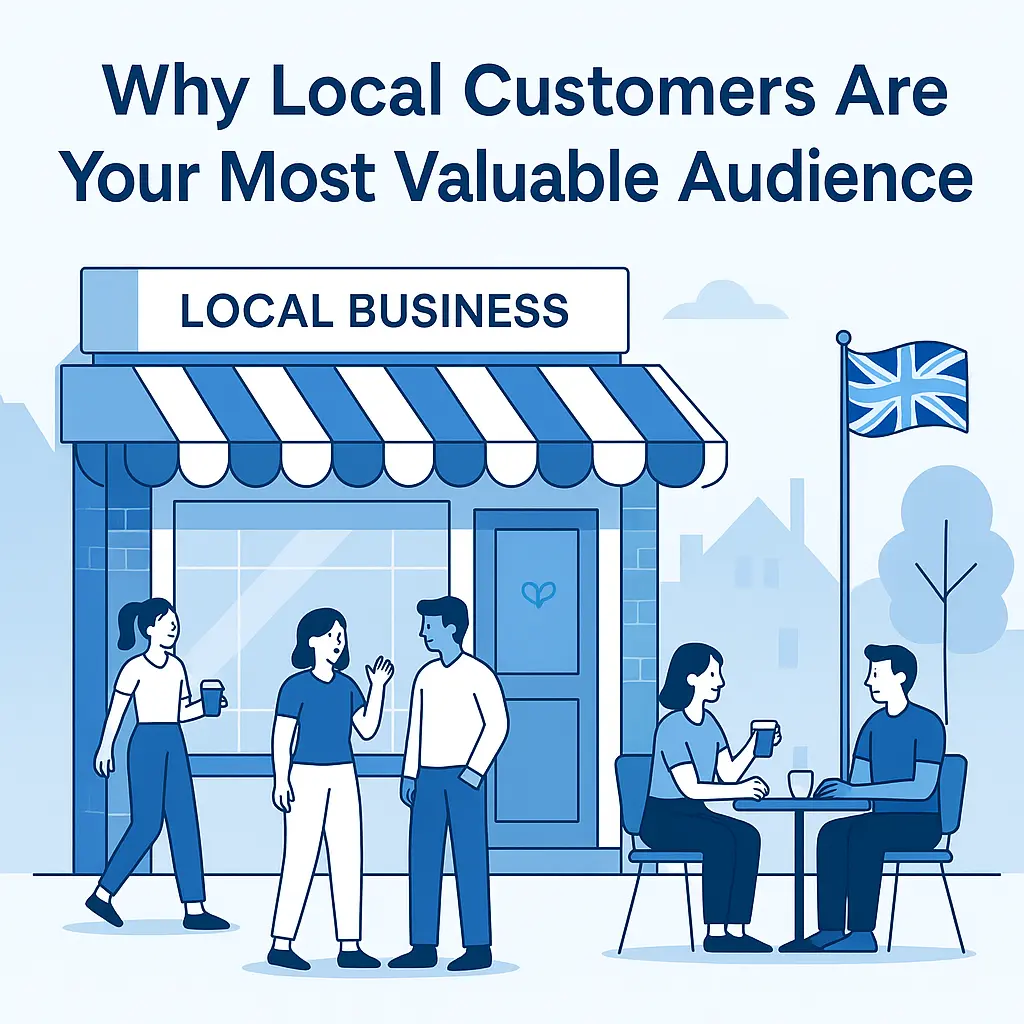
For small businesses across the UK, local customers are the lifeblood of success. Whether you run a café in London, a salon in Manchester, or an accounting firm in Birmingham, your loyal customers often come from within just a few miles of your business. The challenge? Getting their attention in a digital-first world.
That’s where social media marketing for local businesses comes in. Platforms like Facebook, Instagram, and TikTok aren’t just tools for global brands — they’re essential for connecting with your local community. In fact, according to Ofcom’s 2025 Online Nation report, over 87% of UK adults use social media daily, and 68% follow at least one local business on platforms like Instagram or Facebook.
In this post, we’ll explore how to use social media effectively to attract and retain local customers, build trust in your community, and turn online engagement into real-world footfall or enquiries.
If you’re new to digital marketing, you may want to start with my detailed guide — How to Market a Small Business in the UK Without a Big Budget — to understand the fundamentals before diving deeper into social media strategies.
Choosing the Right Social Platforms for Local Reach
Not every social media platform will deliver equal results for your business — and in 2025, knowing where your customers spend their time is just as important as what you post. Each platform serves a slightly different purpose, and your goal should be to focus on the ones where your local audience is most active.
1. Facebook — Still a Local Powerhouse
Despite newer platforms dominating headlines, Facebook remains the most used social platform among UK adults aged 25–54, making it perfect for small businesses targeting local communities.
You can:
- Join or create local community groups.
- Use Facebook Events to promote local sales or in-person events.
- Run geo-targeted ads that only show to people near your business.
2. Instagram — Visual Trust Builder
Instagram is where people see your business personality. High-quality photos of your products, behind-the-scenes clips, and local hashtags like #LondonCafe, #ManchesterSalon, or #BirminghamAccountant can quickly boost your discoverability.
If you’re serious about visibility, dive into short-form content strategies — I’ve covered this in detail in my post,
The Growing Importance of Short-Form Content on Platforms Like TikTok and Instagram Reels.
3. LinkedIn — A Local B2B Connector
For service-based or B2B companies such as accountants, consultants, or designers, LinkedIn can be a goldmine. You can connect with nearby professionals, join regional networking groups, and post valuable insights to build authority.
If your business falls into the professional services sector, check out my guide on
Marketing for Accountants to learn how platforms like LinkedIn can attract high-value local clients.
4. TikTok — Local Discovery on Steroids
TikTok isn’t just for Gen Z anymore. Local hashtags and location tagging make it easy for users to discover businesses nearby. For instance, a hairdresser in Leeds can use “#LeedsHair” or “#UKSalonTips” to appear in local searches.
Short, authentic videos often outperform polished ads — especially when paired with trends. You can combine your TikTok strategy with insights from Digital Marketing Channels for UK Businesses in 2025 to understand how video fits into a broader marketing funnel.
Crafting Content That Converts Local Followers into Customers
Social media isn’t just about posting for the sake of it. It’s about creating content that connects emotionally, informs clearly, and drives local action. The goal is to make people say, “That’s exactly what I’ve been looking for — and it’s right here in my area!”
1. Showcase Real Local Stories
Your local audience relates more to people than polished ads. Post about your team, happy customers, and behind-the-scenes moments that show your brand’s personality. For example:
- A café in London can post a short reel of their morning coffee prep, tagging #LondonCoffee.
- An accountant in Birmingham might share a carousel post of “5 Local Tax Mistakes to Avoid This Year.”
People buy from people — and local authenticity is your biggest competitive advantage.
2. Use Location Tags and Local Hashtags
Don’t underestimate the power of hashtags and geotags. Using local identifiers like #ManchesterBusiness, #LeedsMUA, or #BrightonBoutique can help your posts appear in searches from potential nearby customers.
This is one of the easiest, free ways to increase reach without paying for ads.
For more organic growth strategies, explore my detailed post on
Digital Marketing for Small Business — it breaks down how small business owners can build visibility without a big ad spend.
3. Mix Educational, Entertaining, and Promotional Posts
A winning content mix keeps followers engaged while naturally promoting your business:
- Educational: Share tips, insights, or tutorials relevant to your local niche.
- Entertaining: Use humour, trends, or relatable moments.
- Promotional: Highlight offers, new services, or upcoming events.
The rule of thumb: 70% value-based content, 30% promotional. When people trust your expertise and enjoy your content, they’ll be far more likely to buy.
4. Leverage Short-Form Video to Drive Local Engagement
Short-form videos are dominating social feeds across the UK — especially on TikTok, Instagram Reels, and YouTube Shorts. According to HubSpot’s 2025 marketing report, videos under 30 seconds have 2x higher engagement rates compared to static posts.
You can film:
- Customer testimonials
- “Before and after” transformations
- Local highlights (e.g., your team at a nearby event)
If you’re unsure how to get started with video, read The Growing Importance of Short-Form Content on Platforms Like TikTok and Instagram Reels for practical tips and examples.
Running Paid Social Ads to Target Nearby Customers
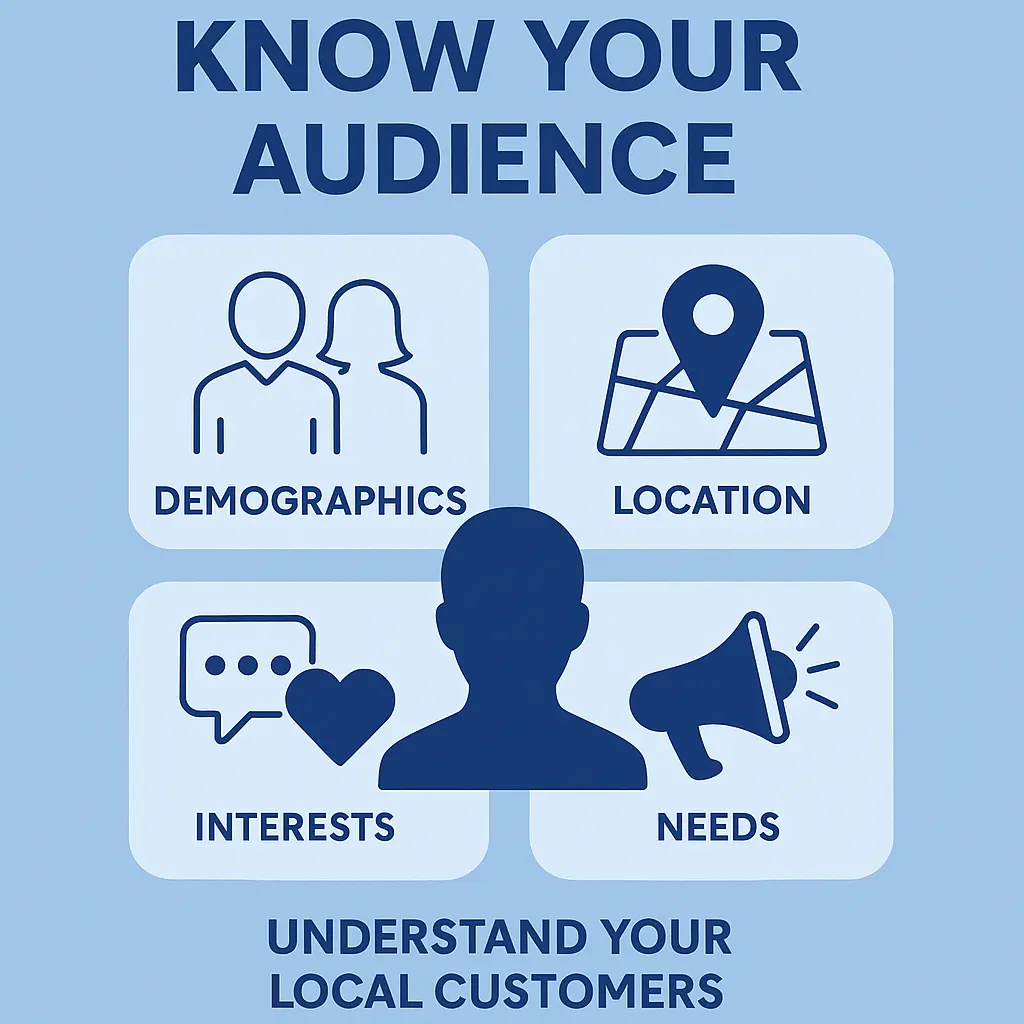
Organic reach is powerful, but combining it with paid social ads can transform your local visibility almost overnight. Platforms like Facebook, Instagram, and LinkedIn allow you to target people by postcode, town, or radius — helping your ads appear only to those most likely to visit or enquire.
Even with a small budget, paid advertising lets you reach your ideal local audience at the right time.
1. Geo-Targeting: Focus on the Right Area
Geo-targeting ensures your ads only appear to users in specific locations — for example, within 5 miles of your business. You can even narrow it down by neighbourhood or city region.
A local hair salon in Manchester can run an ad targeting “women aged 20–40 within 3 miles of M1,” while a construction business in Birmingham might target “homeowners within 10 miles of B1.”
If you’re new to ads, I recommend reviewing Digital Marketing Channels for UK Businesses in 2025 — it explains how inbound and outbound paid strategies can complement each other.
2. Local Awareness Campaigns on Facebook and Instagram
Facebook’s Local Awareness Ads are tailor-made for small businesses. They allow you to promote your business location, include a “Get Directions” button, and show your ad only to people near your store or office.
Instagram also performs brilliantly for visual brands — use stories, reels, and carousel ads with clear CTAs like “Book Now” or “Visit Today.”
For service-based brands like accountants or consultants, these ad types are great for brand familiarity — a concept explained more in-depth in my Marketing for Accountants article.
3. Retargeting: Bring Back Interested Viewers
Retargeting helps you reconnect with people who’ve already visited your website or engaged with your social media. These audiences are often the most likely to convert because they already know your brand.
You can run:
- Instagram retargeting ads for recent profile visitors.
- Facebook pixel campaigns for people who visited your website but didn’t convert.
- LinkedIn remarketing to re-engage professional leads.
If you’re already using analytics or automation tools, connect them with your social media ads for better audience insights. My post on Digital Marketing for Small Business also discusses how to stretch your budget using targeted campaigns.
4. Use Compelling Visuals and Offers
In a crowded feed, visuals make the difference. Use high-quality photos, short videos, or testimonials from local customers. Add urgency with location-specific promotions like:
- “20% off for Manchester locals this week only”
- “Free consultation for London-based startups.”
A clear, visual offer combined with precise targeting will attract the right customers faster.
Engaging Your Local Community and Building Long-Term Loyalty
Social media is not just a marketing tool — it’s your digital handshake with the local community. When used correctly, it helps you build a sense of belonging, loyalty, and brand advocacy that no ad can buy.
In 2025, the most successful UK businesses are those that treat social media as a conversation, not a broadcast. People no longer want to be “sold to.” They want to connect with brands that share their values, celebrate their community, and offer genuine help or inspiration.
1. Start Conversations, Don’t Just Post
Engagement means interaction. Ask questions, create polls, and reply to comments. For example:
- A fitness studio could ask, “What’s your go-to morning workout in London?”
- A restaurant might post, “Which dish should we bring back to our menu?”
These simple interactions show your audience that their opinions matter — which keeps them coming back.
To learn more about fostering organic engagement, you can check out my post Digital Marketing for Small Business — it covers strategies to turn audience interaction into growth.
2. Collaborate with Local Influencers and Brands
Local influencer partnerships work wonders for trust and reach. Even micro-influencers with 2,000–5,000 followers can introduce your business to highly engaged audiences nearby.
For example:
- A café could partner with a local food blogger.
- A salon could collaborate with a nearby beauty boutique for a giveaway.
Collaborations like these are cost-effective and can multiply your visibility overnight.
You can learn more about how influencer partnerships tie into digital strategy in Digital Marketing Channels for UK Businesses in 2025.
3. Share Local Milestones and Community Events
People love seeing businesses that care about their neighbourhood. Post about local events, shout out other small businesses, or celebrate local achievements.
For example:
- Share a photo from a charity event your team attended.
- Highlight a collaboration with a nearby business.
- Tag your town in your stories and posts regularly.
The more you contribute to the community conversation, the more people recognise you as a trusted local name.
4. Feature Customer Testimonials and Success Stories
One of the most powerful ways to build trust is by showcasing happy customers. Share their stories, tag them in posts, or feature short video testimonials.
According to BrightLocal’s 2025 Local Consumer Survey, 87% of UK customers say they trust online reviews as much as personal recommendations. Social proof converts curiosity into confidence.
Tracking Your Social Media Results and Improving Performance
One of the biggest mistakes small business owners make is treating social media like a guessing game. Posting without tracking results is like driving without a map — you might move forward, but you’ll never know if you’re heading in the right direction.
That’s why every successful social media strategy for UK businesses in 2025 includes analytics, performance reviews, and data-driven decisions.
1. Identify the Metrics That Matter
Don’t get distracted by vanity metrics like followers or likes. Instead, focus on performance indicators that directly link to business growth, such as:
- Engagement rate: How many people interact with your content.
- Reach and impressions: How many locals see your posts.
- Click-through rate (CTR): How many people visit your website or landing page.
- Conversions: Enquiries, calls, or bookings from social media traffic.
Tools like Meta Insights, LinkedIn Analytics, and Google Analytics 4 allow you to track exactly which platforms and posts drive real results.
If you’re unsure how to read or use this data, explore my blog Digital Marketing for Small Business — it includes simple breakdowns of analytics tools that make data-driven marketing less intimidating.
2. Use A/B Testing to Refine Campaigns
Every audience is different. The best way to improve performance is through A/B testing, which compares two versions of a post or ad to see what works best.
You can test:
- Captions (long-form vs short punchy ones)
- Images vs videos
- Different CTAs like “Book Now” vs “Get a Free Quote”
Over time, these insights help you optimise future content for higher engagement and conversion.
3. Track Local Hashtag and Geo-Tag Performance
If you’re using location tags and hashtags like #LondonBusiness or #BirminghamEvents, track how they perform using native platform insights. Instagram and TikTok now show reach data per tag — use that to fine-tune which tags bring genuine engagement from local users.
4. Leverage Automation and Scheduling Tools
Managing social media while running a business can be tough. Tools like Buffer, Later, or Hootsuite help you schedule posts, track analytics, and stay consistent.
Automation doesn’t mean losing your personal touch — it simply ensures your brand stays active even when you’re busy with day-to-day operations.
If you’d like to see how automation fits into a wider digital strategy, read my article Digital Marketing Channels for UK Businesses in 2025 — it covers how analytics and automation create long-term marketing efficiency.
Social media is no longer just an optional part of your marketing plan — it’s one of the most powerful tools for attracting local customers in the UK. Whether you’re running a small café in London, a fitness studio in Leeds, or a professional service in Manchester, your ability to connect online directly shapes your visibility offline.
The key is not to be everywhere — but to be strategic:
- Choose platforms where your local customers are most active.
- Create content that resonates with your community and highlights your personality.
- Use targeted ads to reach nearby audiences.
- Measure, optimise, and repeat what works best.
Frequently Asked Questions
1) Which social platforms are best for attracting local UK customers?
Facebook is strong for community groups and local events. Instagram is ideal for visuals and Reels. TikTok drives discovery with short videos. LinkedIn works well for local B2B services. Choose one or two based on where your customers already spend time.
2) How can I target people near my shop or service area?
Use platform geo-targeting to set a radius around your postcode. Combine location targeting with interests and age ranges. On organic posts, add geo-tags and local hashtags to appear in location searches.
3) What should I post to convert local followers into customers?
Mix educational tips, behind-the-scenes clips, customer stories, limited-time local offers and clear calls to action such as Book Now or Visit Today. Feature staff and real customers to build trust quickly.
4) How often should a local business post on social media?
Aim for three to five posts per week plus a few stories or short videos. Consistency matters more than volume. Batch content and schedule with tools like Buffer or Later to stay regular without stress.
5) What local hashtags should I use in the UK?
Combine city and neighbourhood tags such as #LondonCafe, #LeedsSalon, #BirminghamFitness with niche tags like #UKPlumber or #ManchesterMarketing. Add event or landmark tags when relevant to join local conversations.
6) What budget do I need for local social ads?
Start small with £5–£15 per day for a two-week test. Run one awareness campaign and one retargeting campaign. Keep the winner, refine the audience and creative, then scale gradually based on cost per enquiry or booking.
7) How do I measure if my social media is bringing local customers?
Track reach in your region, engagement rate, clicks to your website, enquiries and redemptions of local offers. Use UTM links in bios and ads, plus Google Analytics to attribute leads to each platform.
8) How can I turn followers into in-store visits or calls?
Use location-specific promos, Click to Call buttons, Book Now links and Get Directions CTAs. Share maps in stories, pin opening hours and feature customer check-ins to encourage footfall.
9) What common mistakes should local businesses avoid?
Posting without a plan, ignoring comments, using only sales posts, skipping geo-tags and not tracking results. Keep a content calendar, reply quickly and test different creatives to learn what works.
10) Does short-form video really help with local reach?
Yes. Reels, TikToks and Shorts get strong distribution and can rank on location pages. Keep videos under 30 seconds, add captions, include your town in text overlays and end with a clear call to action.
When done right, social media marketing builds not just visibility — but trust, community, and loyalty that last far beyond one campaign.
If you’re ready to turn your social media presence into a real growth engine, I can help. I’ve spent years helping UK business owners develop tailored digital marketing strategies that attract more local customers, generate leads, and grow their revenue.👉 Visit my homepage to learn more about my marketing services.
📘 Explore the blog section for more guides like
How to Market a Small Business in the UK Without a Big Budget and
Digital Marketing for Small Business.
📩 Or head straight to my contact page to book a free strategy consultation for your business today.