
Why Lead Generation for Small Businesses Matters More Than Ever
Imagine you’re a small business owner in Manchester. You’ve got a great product, a loyal handful of customers, but growth feels slow. You’ve tried posting on social media, boosting ads, and handing out flyers, yet new leads remain inconsistent.
You’re not alone. According to the Federation of Small Businesses (FSB), more than 5.5 million small businesses operate in the UK, and around 62% report lead generation as their biggest marketing challenge.
This guide explores proven, data-backed ways to generate leads online UK business owners can actually convert into paying customers. You’ll discover how modern small business lead generation strategies work in the real world and how to implement them without burning through your budget.
If you’re just starting your marketing journey, it may also help to review some foundational principles in digital marketing for small businesses.
Understanding the Modern Lead Generation Landscape in the UK
A “lead” is simply someone who has shown interest in your product or service, whether by subscribing to your newsletter, requesting a quote, or following your business page. But in 2025, UK consumers have become far more selective. They don’t respond to cold calls or spammy promotions anymore. Instead, they connect with brands that educate and provide value first.
A HubSpot UK report in 2023 found that 68% of buyers prefer to engage with businesses that help them learn before selling. This shift means your marketing must focus on building trust, providing value, and creating a personal connection before asking for a sale.
To make your business discoverable, it’s worth investing in strong SEO for small businesses in the UK, which builds a foundation for long-term organic visibility and lead flow.
Strategy 1: Build Local Trust with SEO and Google Maps
When it comes to local lead generation, visibility is everything.
Think about how often you search for “hairdresser near me” or “electrician in London.” Those local listings that pop up on Google Maps are powered by local SEO, one of the most effective and affordable ways to drive leads.
According to BrightLocal’s 2024 Consumer Review Survey, 98% of UK consumers used the internet to find information about local businesses in the past year. That means if your company isn’t showing up in search results, you’re missing a huge chunk of potential customers.
Start by:
- Claiming and optimizing your Google Business Profile
- Collecting reviews and responding quickly
- Using keywords that include your city or region
- Adding photos and consistent contact information
For a deeper look into how local visibility impacts growth, explore the guide on local businesses in the UK.
Strategy 2: Use Short-Form Content to Capture Attention
The average UK social media user now spends just 1.7 seconds looking at a piece of content before scrolling past (Meta UK, 2024). To stand out, small businesses are embracing short-form videos on TikTok, Instagram Reels, and YouTube Shorts.
Short videos make storytelling quick and relatable. You can show your products, highlight customer testimonials, or give a behind-the-scenes look at your business.
Take Sweet Crumb, a bakery in Birmingham. They started posting 15-second clips of their frosting process on Instagram Reels. One video hit 120,000 views, bringing a 42% increase in website traffic and dozens of new catering leads within weeks.
If you want to understand why this content type performs so well, check out the article on the growing importance of short-form content.
Strategy 3: Use Content Marketing to Build Authority
If SEO helps people find you, content marketing helps them trust you.
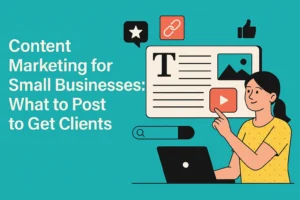
UK customers prefer brands that teach, inform, and entertain rather than push for sales. Consistently publishing high-quality blogs, guides, or tutorials positions you as a credible expert in your niche.
A small accounting firm in Leeds began publishing weekly blog posts answering questions like “Can I claim WFH expenses?” Within three months, their organic traffic increased 78%, and their inbound leads tripled.
Practical tips:
- Write about specific problems your audience faces (“lead gen for small business UK” is a perfect example).
- Offer downloadable resources, free checklists, or webinars.
- Include calls to action that invite readers to get in touch or subscribe.
To understand how different content types work together, explore this resource on digital marketing channels.
Strategy 4: Combine Email Marketing with Automation
Email marketing remains one of the most reliable lead generation tools for small businesses. Campaign Monitor’s 2024 report found that every £1 spent on email marketing in the UK returns an average of £36.
Start by offering something valuable in exchange for an email address—a free guide, an exclusive discount, or early access to a product. Then, nurture your leads with automated email sequences.
A three-step flow works well:
- Welcome email – Thank them for subscribing and introduce your brand story.
- Value email – Offer useful insights or case studies.
- Offer email – Present your product or service with a clear call to action.
Automation tools let you set this up once and watch leads warm up on their own.
Strategy 5: Run Localized Paid Ad Campaigns
Paid advertising can generate results quickly when done strategically. Instead of running broad, costly national campaigns, focus on hyperlocal targeting.
Google’s 2023 UK SMB Report showed that local ad targeting can cut cost-per-lead by up to 38% compared to generic campaigns.
To make the most of your budget:
- Target by postcode or city.
- Use demographic filters (age, interests, behavior).
- Retarget users who visited your website but didn’t convert.
For broader marketing insights, visit this detailed guide on how to market a small business in the UK.
Strategy 6: Collaborate and Network with Other Businesses
Sometimes, the best leads come from partnerships rather than ads. Networking with other small businesses, both online and offline, can open new lead sources and build credibility.
For example, a gym in Glasgow partnered with a nearby smoothie bar for a joint giveaway. Each promoted the other’s business on social media. The result: a 25% increase in followers and over 200 new email leads within a week.
Participate in local events, business associations, or online communities. Referrals from trusted partners convert much faster than cold traffic, and these collaborations often cost nothing but time.
Strategy 7: Track, Measure, and Optimize Every Channel
You can’t improve what you don’t measure. Data reveals which marketing activities generate real results and which ones drain your time.
Use tools like Google Analytics 4, Google Search Console, or CRM dashboards to track:
- Website visits and top traffic sources
- Form submissions and call inquiries
- Keyword rankings and conversions
Small businesses can automate weekly reports using tools like n8n or Make, helping you see exactly where your best leads originate. Over time, this makes your campaigns sharper, cheaper, and more consistent.
If you’d like to see examples of real campaigns and results, take a look at my portfolio.
The Story of a UK Business That Got It Right
Meet Luna & Oak, a handmade candle brand from Bristol. Owner Amelia struggled with low online visibility and unpredictable sales. After implementing three lead generation strategies—optimizing for “sustainable candles UK,” posting weekly short-form videos, and offering a free scent guide through her email list—everything changed.
Within six months:
- Website traffic increased 132%
- The email list tripled
- The brand began receiving 15 to 20 inbound leads every week
Her journey shows that consistent, authentic marketing beats aggressive sales tactics every time. It’s about building trust, not just traffic.
Conclusion: The New Era of Lead Generation in the UK
The landscape of lead gen for small business UK has transformed. Success is no longer about who spends the most money but about who builds the most trust.
Start with the basics—SEO, content, and local marketing—and then expand into social video, automation, and collaborations. Every click, comment, or email can turn into a new customer if you nurture it correctly.
To learn more about scaling your marketing, check out:
- SEO for Small Businesses in the UK
- Digital Marketing for Small Business
- Local Businesses in the UK
- Digital Marketing Channels
And if you’re ready to take your strategy to the next level, contact me to get started today.
Frequently Asked Questions about Lead Generation for Small Businesses
1. What is lead generation for small businesses?
Lead generation for small businesses is the process of attracting and converting potential customers who show interest in your products or services. It’s about building trust, capturing contact details, and nurturing relationships until they’re ready to buy.
2. How can I generate leads online for my UK business?
To generate leads online in the UK, optimize your website for search engines, create valuable content, engage on social media, and use tools like Google Ads or email marketing. These digital channels help attract and convert targeted audiences efficiently.
3. What are the best small business lead generation strategies?
The best small business lead generation strategies include SEO, local marketing, social media engagement, short-form video content, partnerships, and email automation. A combination of these creates consistent and qualified leads.
4. Is paid advertising worth it for small businesses in the UK?
Yes, when done strategically. Localized paid ads on Google, Facebook, and Instagram can deliver strong ROI if targeted by region, interest, and behavior. Start small, test messaging, and optimize based on conversions.
5. How can SEO help with lead generation?
SEO helps your business appear when potential customers search for related services online. By ranking higher on Google, you attract more visitors who are actively looking for what you offer—making them high-quality leads.
6. What role does content marketing play in lead generation?
Content marketing builds authority and trust. By publishing valuable blog posts, guides, or videos, you position your business as an expert and attract leads naturally through education rather than direct selling.
7. How can social media help me get more leads?
Social media platforms like LinkedIn, Facebook, and Instagram are powerful tools for engagement. Sharing customer stories, running giveaways, and using ads can attract followers who convert into paying customers.
8. How do I know if my lead generation strategy is working?
Track your results through Google Analytics, CRM data, and email engagement metrics. Focus on conversion rates, cost per lead, and lead quality to measure what’s working and where improvements are needed.