Why Content Marketing Matters for Small Businesses
In 2025, over 82% of marketers actively invest in content marketing, according to HubSpot. For small businesses, this isn’t just a marketing trend; it’s a necessity. Unlike traditional advertising that interrupts, content marketing attracts by offering genuine value to potential customers before a purchase decision is made.
For small businesses, the right content can:
- Boost visibility in Google search results
- Build trust and authority in your niche
- Drive leads and long-term client relationships
If you’re operating in the UK or beyond, a solid digital strategy is key to staying competitive. Learn how to strengthen your online presence in SEO for Small Businesses UK.
Understand Your Audience First
Before deciding what to post, you must understand who you’re posting for. Start by creating buyer personas — detailed profiles of your ideal clients that include demographics, interests, and pain points.
Ask yourself:
- What problems does my audience need solved?
- What questions are they typing into Google?
- Which platforms do they trust and use most often?
For example, if you’re targeting small business owners looking to attract clients online, you’ll want to create educational and problem-solving content that aligns with their goals. That’s the foundation of effective Lead Generation for Small Businesses.
What Kind of Content Attracts Clients?
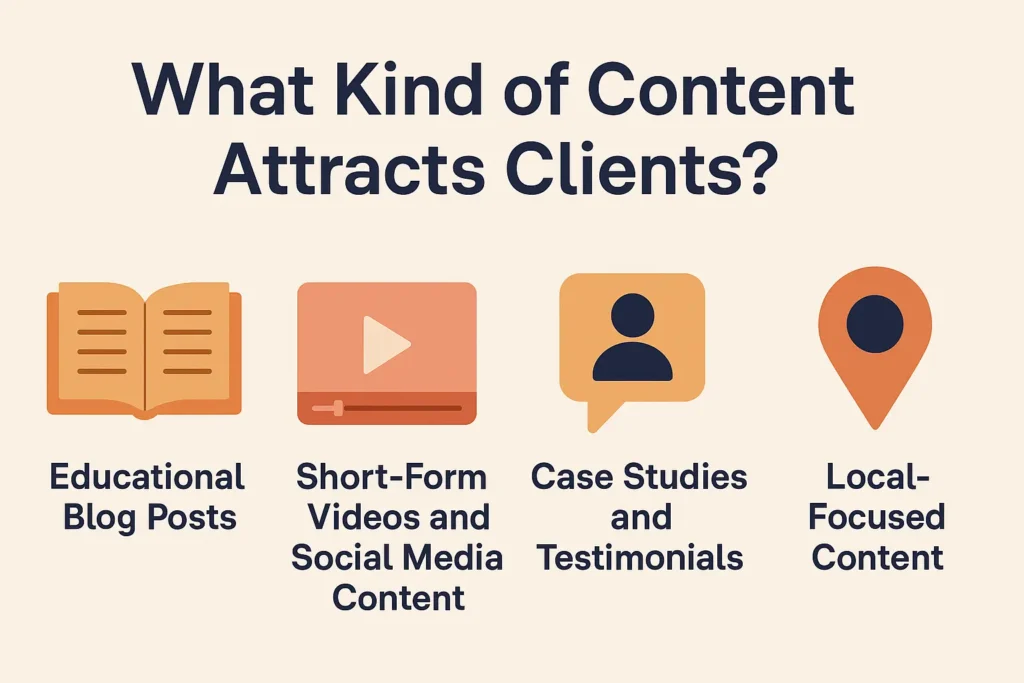
Not all content performs equally. Here’s what consistently drives engagement and conversions.
A. Educational Blog Posts
Blogging remains one of the most powerful ways to attract organic traffic. Businesses that publish blogs generate 67% more monthly leads than those that don’t (Demand Metric).
Focus on posts that answer real client questions — “How to Choose the Right Consultant” or “5 Mistakes Small Business Owners Make Online.”
Each post should include relevant keywords, internal links, and a clear call to action.
Example: A blog on “The Importance of Local SEO” could link naturally to your Local Businesses UK page to reinforce authority and encourage readers to explore more.
B. Short-Form Videos and Social Media Content
Visual content dominates today’s attention economy. According to Wyzowl’s 2024 Video Marketing Report, 91% of consumers want more online video from brands.
Platforms like TikTok, Instagram Reels, and YouTube Shorts are especially effective for quick, engaging stories that show your brand personality.
You can learn how to harness this trend in The Growing Importance of Short-Form Content.
Types of videos that perform well:
- “Behind the scenes” clips showing your work process
- Quick client success stories
- Short how-to videos answering FAQs
C. Case Studies and Testimonials
Trust is the new currency of marketing. Case studies provide proof of your results.
Highlight specific numbers — for instance, “We helped X client increase their leads by 40% within 3 months.”
Include screenshots, metrics, and direct client quotes.
If you’re in professional services, check out SEO Marketing for Accountants for an example of how service-based industries use content to attract qualified leads.
D. Local-Focused Content
For many small businesses, local visibility = profitability.
Share posts about local events, collaborations, or customer success stories from your area. This builds community trust and improves local SEO rankings.
Google data shows that 46% of all searches have local intent (“near me” queries).
So, create blog titles like:
- “Best Tips for Local Businesses in [Your City]”
- “How Our Town’s Entrepreneurs Are Growing Online”
Where to Post: Choosing the Right Channels
A good content strategy isn’t about being everywhere, it’s about being where your clients are.
Here are the most effective content channels for small businesses:
- Website blog – Your SEO foundation.
- Social media – For engagement and brand awareness.
- Email marketing – For nurturing warm leads.
- Video content – For storytelling and authenticity.
All of these should tie into a cohesive plan. Explore more practical tactics in Digital Marketing for Small Business.
How Often Should You Post?
Consistency builds credibility, both with clients and search engines.
A realistic schedule might include:
- 1 in-depth blog post per week
- 2–3 social posts weekly
- 1 newsletter per month
Repurpose content: Turn a blog into a LinkedIn post, or condense it into a short video. This multiplies your reach without multiplying your workload.
SEO: Turning Content into Clients
High-quality content only works if it’s discoverable.
Here’s how to make your posts SEO-ready:
- Use keywords naturally in headlines, URLs, and meta tags.
- Add internal links to guide readers through related content.
- Use descriptive image alt text for accessibility.
- End every piece with a strong call to action (CTA), like “Book a Consultation” or “Download Our Free Guide.”
A great next step is exploring How to Market a Small Business in the UK for region-specific SEO strategies.
Measuring Content Success
You can’t improve what you don’t measure.
Track metrics such as:
- Organic traffic growth (via Google Analytics)
- Engagement rate (likes, comments, shares)
- Lead conversion rate
- Keyword rankings in Google Search Console
If certain posts bring in the most traffic, expand on those topics — they’re proven demand indicators.
Content marketing for small businesses isn’t about producing endless posts, it’s about creating valuable, relevant, and consistent content that educates and builds trust.
By mixing blog posts, short-form videos, and testimonials, and supporting everything with smart SEO, your business can attract and retain loyal clients, even in competitive markets. Start small, stay consistent, and remember: content is not a cost, it’s a long-term investment in visibility and credibility.
💬 Frequently Asked Questions (FAQs)
1. What is content marketing for small businesses?
Content marketing is a strategy focused on creating valuable, consistent content — such as blog posts, videos, and social media updates — to attract and engage potential clients. It helps build trust and drive conversions over time.
2. Why is content marketing important for small businesses?
According to HubSpot, over 80% of marketers say content marketing generates measurable results. For small businesses, it’s a cost-effective way to boost brand visibility, generate leads, and build loyal customers.
3. What type of content should I post to get clients?
Focus on educational blogs, client success stories, how-to videos, and community updates. Mix written and visual content for maximum engagement. You can explore more on lead generation content here.
4. How often should I post new content?
Aim for consistency rather than volume. Posting one blog per week and a few social media updates weekly keeps your brand active and relevant in search engines.
5. How long does it take to see results from content marketing?
Content marketing is a long-term strategy. Most small businesses start seeing measurable results — like organic traffic growth and lead conversions — within 3–6 months.
6. What’s the role of SEO in content marketing?
SEO (Search Engine Optimization) ensures your content appears when potential clients search for related topics. Learn more about SEO for small businesses in the UK to make your content work smarter.
7. Should I focus on blogs or social media?
Both! Blogs build long-term SEO authority, while social media provides instant engagement. Repurpose your best blog ideas into short-form videos or carousel posts for platforms like Instagram and LinkedIn.
8. How can I make my content stand out from competitors?
Focus on storytelling, authenticity, and local relevance. Add original insights, real client stories, and visuals to make your content memorable. Learn more about marketing a small business in the UK.